Originally hailing from London, England, I moved to Upstate New York at the age of 13. While I have always harbored a deep interest in photography, it wasn't until 2011, when I had the opportunity to borrow an underwater camera on a dive, that I truly began taking the craft seriously. That single spark led me to immerse myself in numerous specialized underwater photography workshops to master the unique challenges of shooting beneath the surface.
In 2016, I retired from a career at GE and relocated to Sarasota, Florida. Retirement opened the door to travel extensively, and with the exception of a forced break during COVID, I have significantly increased the number of annual, photography-focused expeditions I undertake.
For the past several seasons, my go-to camera system has been a Nikon D850 in a Nauticam housing, paired with Retra Pro strobes. The D850 has been an absolute workhorse, delivering the high-resolution files and dynamic range that I was looking for. However, as camera technology hits a new inflection point, I am currently preparing for a complete system migration to mirrorless with the Sony A7R VI. For an underwater shooter, the advantages of modern mirrorless bodies are impossible to ignore; features like an electronic viewfinder that allow you to never have to pull your head away from the viewfinder to see if you got the shot, real-time focus peaking and AI-driven autofocus capable of locking onto a subject's eye completely change how we execute shots in challenging aquatic environments.
Technical Versatility in Macro and Wide-Angle
As a recreational diver, my joy comes from the creative process of the shoot itself. For my macro work, when I find a cooperative subject, I rarely settle for just one look; instead, I challenge myself to shoot it using a variety of distinct techniques. I might start with a wide-open aperture to create a beautifully creamy bokeh background, switch settings to drop the ambient light for a stark black background, or use a snoot to isolate the subject while simultaneously dropping the shutter speed to burn a bit of ambient blue or motion blur into the frame.
Conversely, changing environments demands pre-planning. Whether I am packing for the crystal-clear freshwater springs of my home state of Florida, the dense muck of Lembeh Strait, or traveling to Tonga for the sole purpose of photographing humpback whales, adapting my mindset is all about preparation.
Before a trip even begins, I visualize the exact images I want to capture to dictate my packing list. Once on the dive boat, I tailor my configuration strictly to the targeted environment. Is this a dive for manta rays, pygmy seahorses, or a dramatic wreck? The answer determines which lenses are mounted, whether the housing needs to be weighted to be perfectly neutral or slightly negative, and whether I will be deploying off-camera strobes.
Community, Education, and Inside Scuba
Sharing the knowledge accumulated over the last decade has become a massive part of my diving life. In 2018, a diving trip to Iceland introduced me to Byron Conroy, who was my guide. Our mutual obsession with underwater imagery sparked a close friendship and constant technical discussions. Realizing that our weekly deep-dives into lighting strategies and gear reviews could benefit others, we co-founded Inside Scuba.
What started as a casual newsletter has steadily grown to over 1,000 subscribers, attracting a dedicated collection of serious underwater photographers, including many well-known professionals. In addition to our own in-depth articles, we also feature regular collaborations with top industry leaders, continuing to grow our footprint by serving the core photography community. Today, the platform has expanded far beyond the inbox into our Inside Scuba photography workshops. Byron handles the daily lectures while I run the post-processing side, teaching Photoshop and Lightroom workflow.
What I find most rewarding about these workshops is their inclusivity. We regularly host guests spanning the entire spectrum of the craft—from complete beginners who barely know how to change their camera settings, to multi-award-winning photographers. Helping people visibly grow within their hobby over the course of a single trip is an immense privilege. Beyond the workshops, I also stay connected to the global community as an active member of the British Society of Underwater Photographers (BSoUP), serving on the committee and acting as the Competitions Secretary for the past four years.
The Philosophy Behind the Lens
While I spent years actively competing—earning accolades such as 2nd place Macro at Beneath the Sea 2014, a wide-angle placement in National Geographic’s Pristine Seas 2016, and being Commended in Behavior at the Underwater Photographer of the Year 2015—I stepped away from the competition circuit several years ago.
Today, I am motivated by the sheer love of diving and the joy of sharing the underwater world. I get an incredible amount of fulfillment from presenting my images to friends and family who aren't divers. Most of them have never heard of, let alone seen, the bizarre critters I bring home on my memory cards. Being able to share the stories, the strange animal behaviors, and the delicate nature of these diverse aquatic environments is exactly why I continue to look through the viewfinder.
(click to enlarge images)
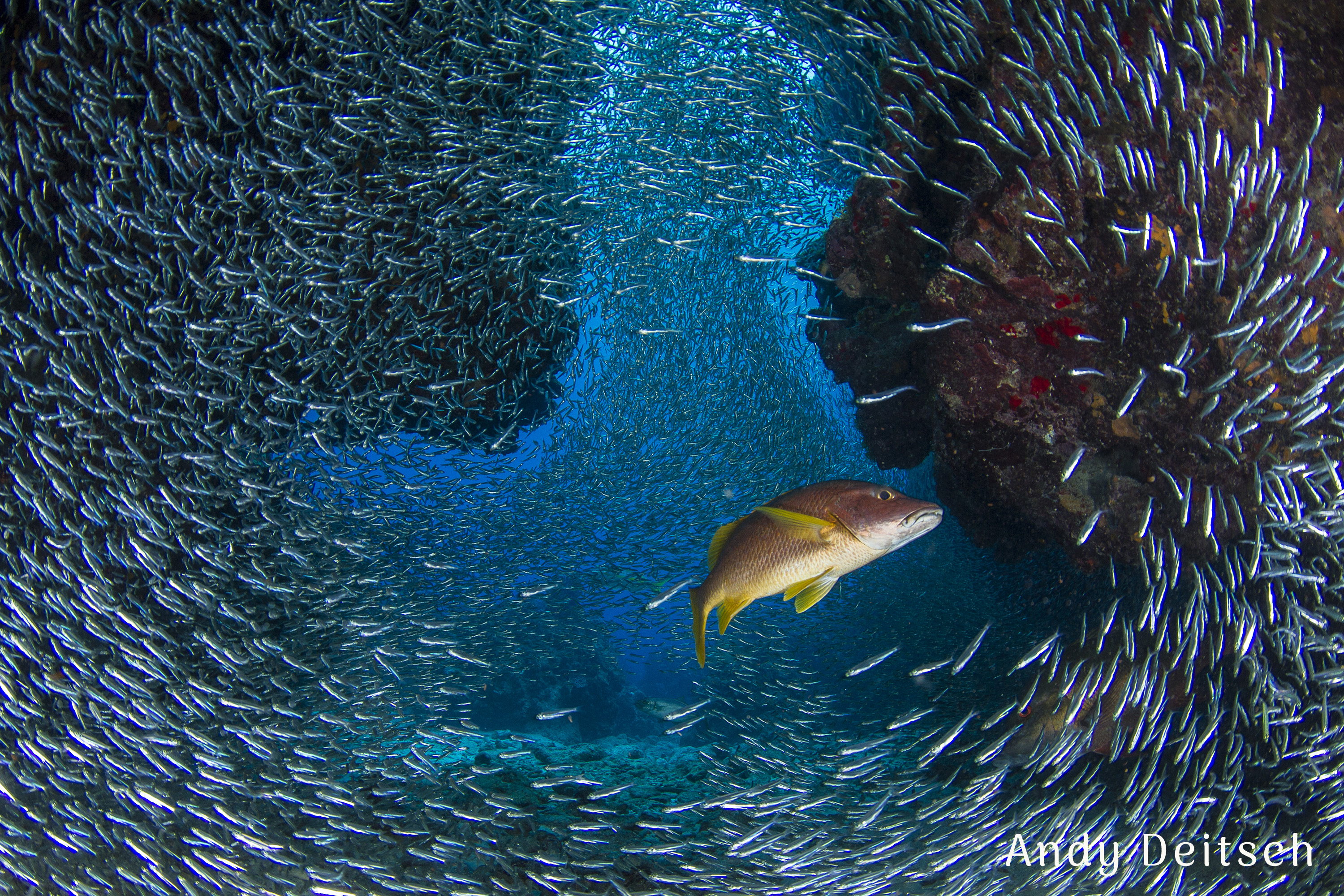
Above: During late summer in Grand Cayman, massive schools of silversides aggregate within the island's caverns, creating a shifting wall of silver. This seasonal phenomenon draws an array of apex predators, including tarpon, groupers, and this lone schoolmaster snapper on the hunt.
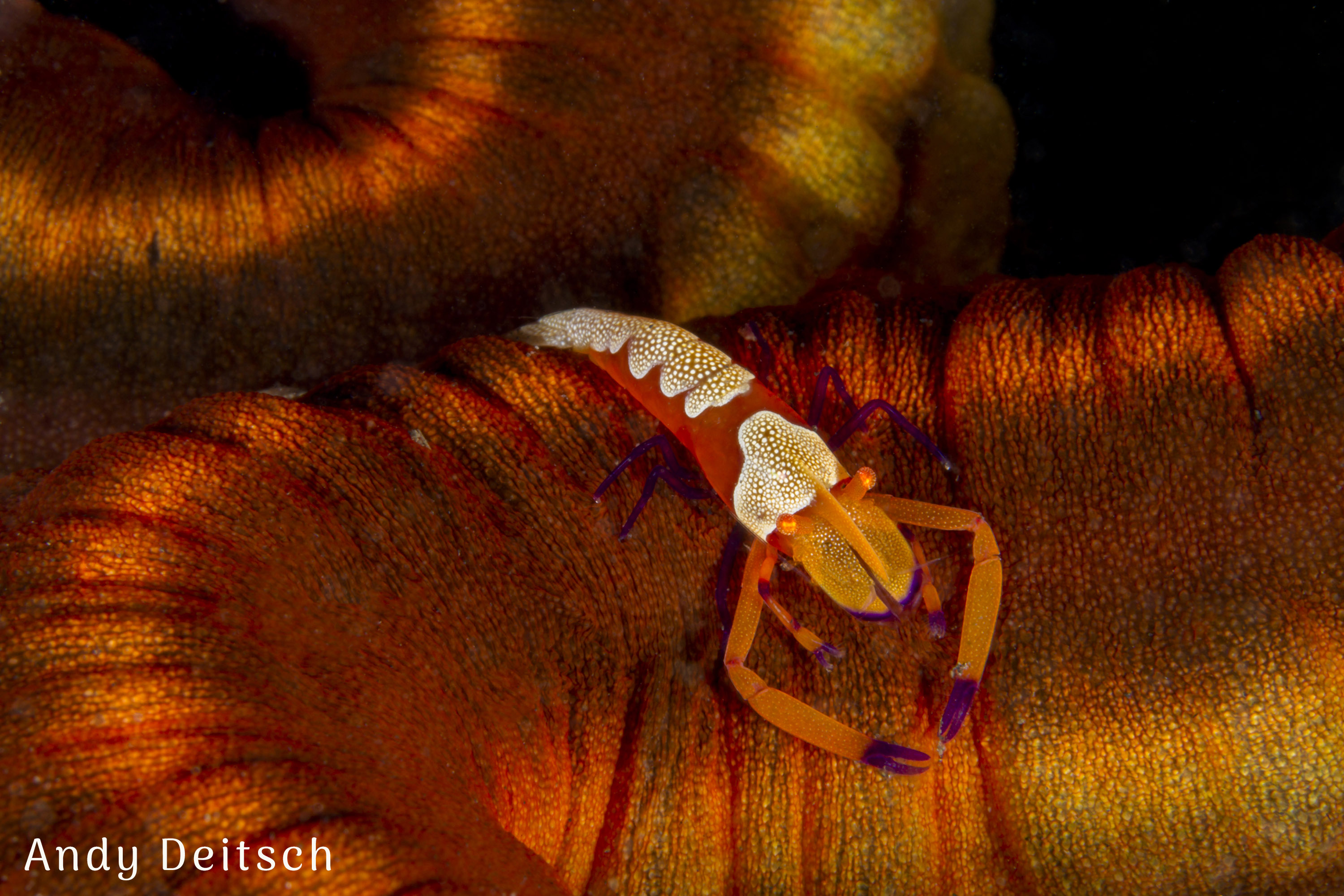
Above: An emperor shrimp (Periclimenes imperator) riding aboard its host. These striking macro subjects share a commensal relationship with larger invertebrates like sea cucumbers and nudibranchs, utilizing them for both transportation and protection.
Above: A snorkeler navigates the ethereal, sun-dappled waters of Jellyfish Lake in Palau. Isolated from the ocean for millennia, these unique golden jellyfish have lost their potent sting, allowing for completely uninhibited, face-to-face interactions.
Above: A scalloped hammerhead shark (Sphyrna lewini) patrols the blue waters off Darwin Island in the Galápagos. This remote volcanic outpost is world-renowned for attracting massive schools of these iconic predators, drawn by the nutrient-rich currents of the archipelago.
Above: A spotted eagle ray rests in a research net, awaiting tagging, tissue sampling, and measurement as part of Mote Marine Laboratory’s long-term study on the species' seasonal aggregations in Sarasota, Florida. In the background, researchers on the vessel process a second ray in the holding tank. (From left) Lisa Hoopes, Breanna DeGroot, Kim Bassos-Hull, an unidentified crew member, and Captain Dean Dougherty.
Above: A burst of six-ton energy: Fresh from suckling, a curious humpback whale calf charges directly toward the camera in Tonga, while its massive mother rests watchfully in the background. Capturing this frame required swimming backward at full speed to maintain a safe distance from a very playful, very large baby.
Above: A unique perspective of 'Casper,' a rescued alligator swimming directly overhead. In Florida, any reported gator over four feet is labeled a 'nuisance' and typically killed for meat and hide, but handler Chris Gillette rescues them for sanctuary life. To capture this frame, I asked Chris to call Casper directly toward me; as the gator approached, I exhaled, sank to the bottom, and shot upward.
Above: Timing is everything when shooting in shallow water. By arriving at Grand Cayman’s famous Stingray Sandbar at sunrise, the harsh tropical sun is traded for a soft, directional golden light that beautifully illuminates the texture of the sand ripples and the sleek silhouette of the southern stingray.
Above: A secretary blenny (Acanthemblemaria maria) peeks out from its home inside a discarded tube worm hole in St. Lucia. No thicker than the sharpened point of a pencil, these diminutive, charismatic fish utilize abandoned worm tubes and coral cavities for shelter and protection from predators.
Above: Where two worlds meet: A manatee comes up to the surface for a breath in a Northern Florida spring. This over/under perspective highlights the delicate boundary between the terrestrial forest and the fragile freshwater ecosystem that serves as a winter sanctuary for manatees seeking 72°F warmth.
Above: A robust ghost pipefish (Solenostomus cyanopterus) perfectly camouflaged among the arms of a crinoid in the Lembeh Strait, Indonesia. To isolate the hidden subject, I shot with an open aperture to create a smooth, melting bokeh while utilizing a slow shutter speed to burn in the ambient blue background.
Above: An orange painted frogfish (Antennarius pictus) stands out against a dramatic, stylized backdrop in Indonesia's Lembeh Strait. To achieve this fine-art effect, a snoot was used to isolate the light strictly on the frogfish, while a very slow shutter speed paired with rapid camera movement created the vibrant blue blur in the background.
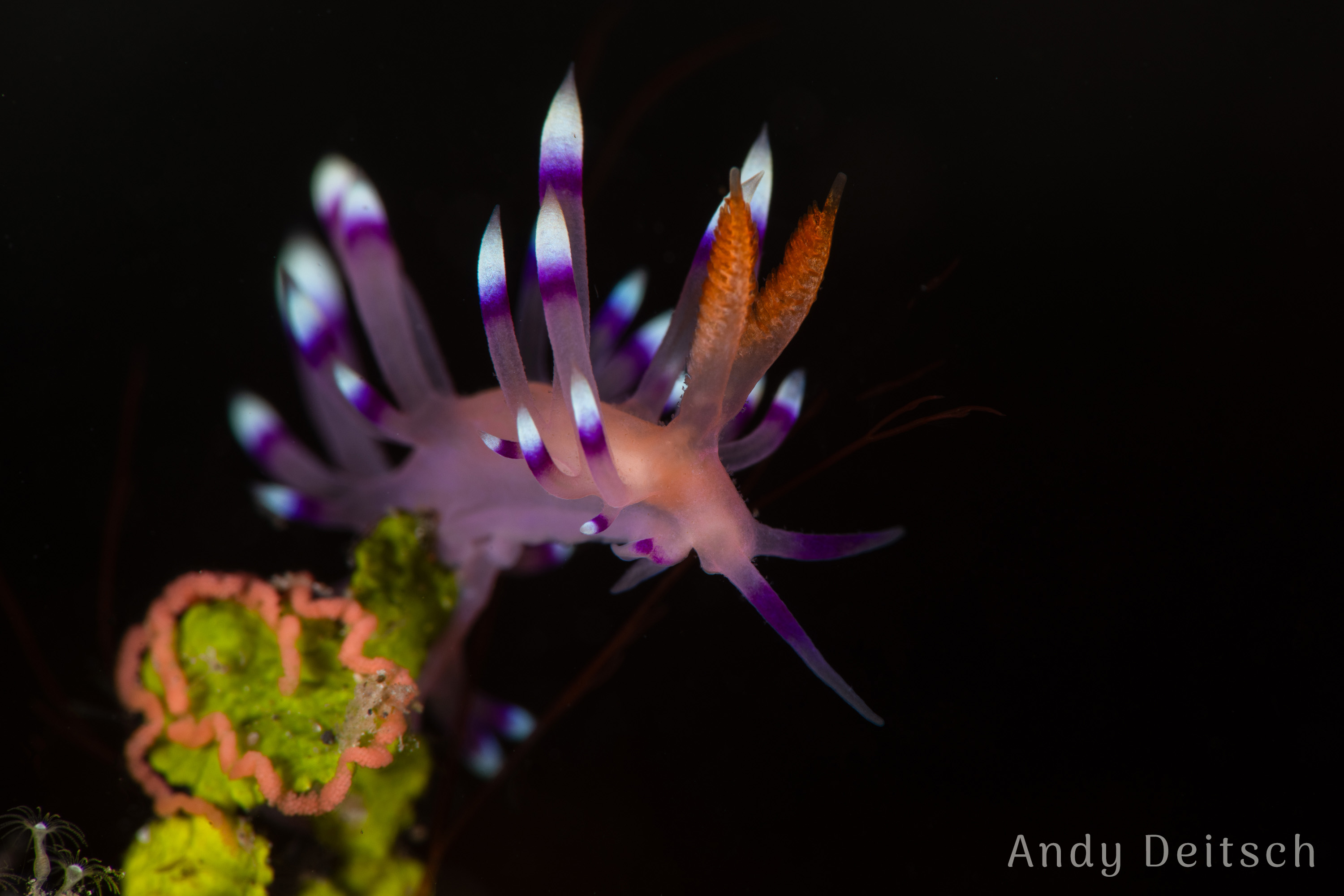
Above: A vibrant nudibranch (Coryphellina exoptata) stands out in stark relief against a black background in the Lembeh Strait. A snoot was used to isolate the colorful sea slug, drawing the eye directly to its intricate details and the pinkish-orange coiled ribbon of eggs it has just deposited on the lower left.
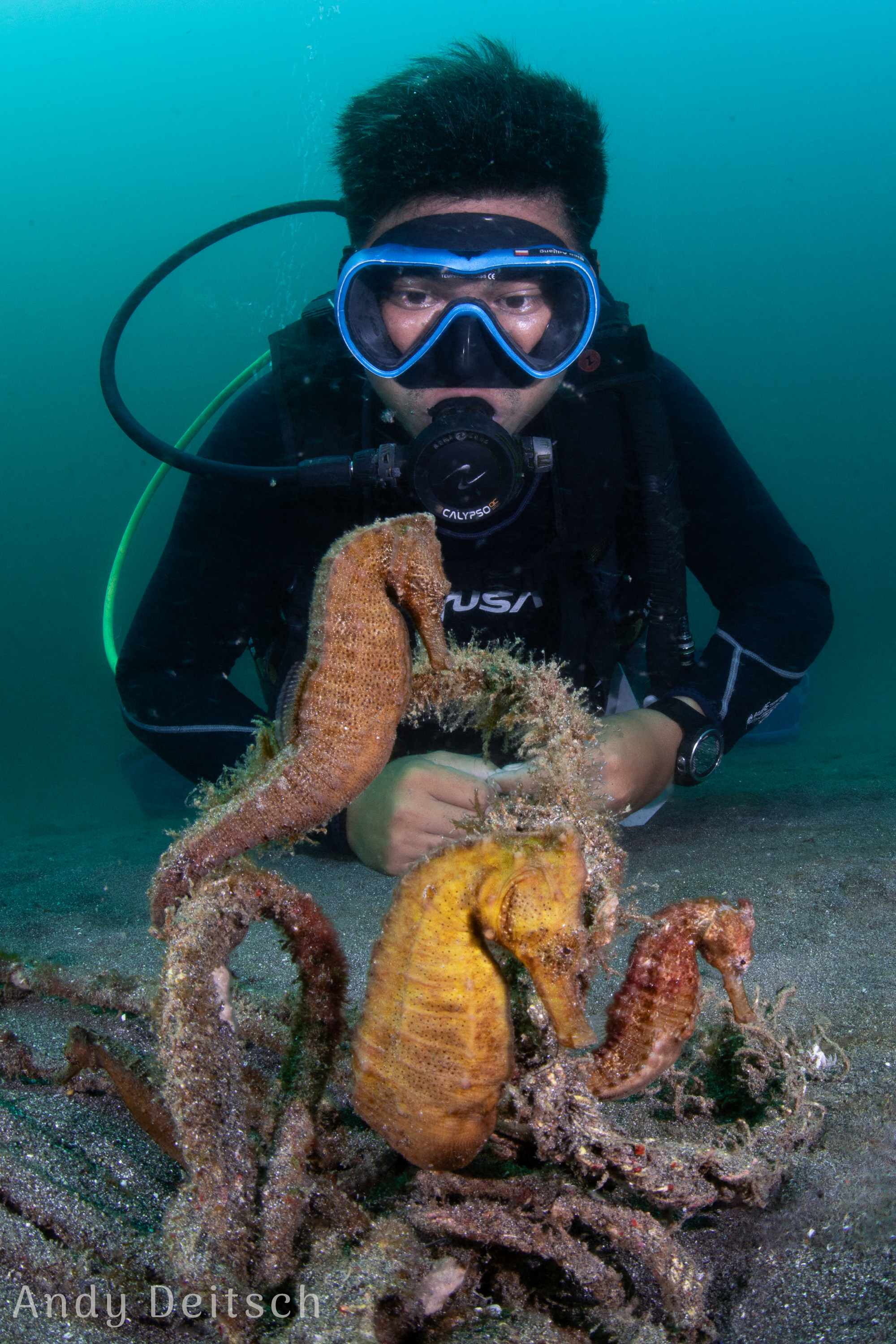
Above: A moment of pure serendipity in the Lembeh Strait: Dive guide Rico Adilang Sumenda spots three common seahorses (Hippocampus kuda) perfectly lined up and facing the same direction along a discarded piece of rope. In muck diving, having a sharp-eyed guide and a bit of luck can turn an ordinary piece of debris into a masterpiece.




 In 2016, I retired from a career at GE and relocated to Sarasota, Florida. Retirement opened the door to travel extensively, and with the exception of a forced break during COVID, I have significantly increased the number of annual, photography-focused expeditions I undertake.